How NASCAR is Engaging the Next Generation Through Virtual Worlds

Think about the traditional image of NASCAR for a second. You probably picture loud V8 engines, hot asphalt, and packed grandstands on Sunday afternoons. That had been the only way people fell in love with stock car racing earlier. But things are different now.
Young fans are not just sitting on couches to watch four-hour TV broadcasts. They hang out in 3D digital worlds, create their own games, and talk with friends across online servers.
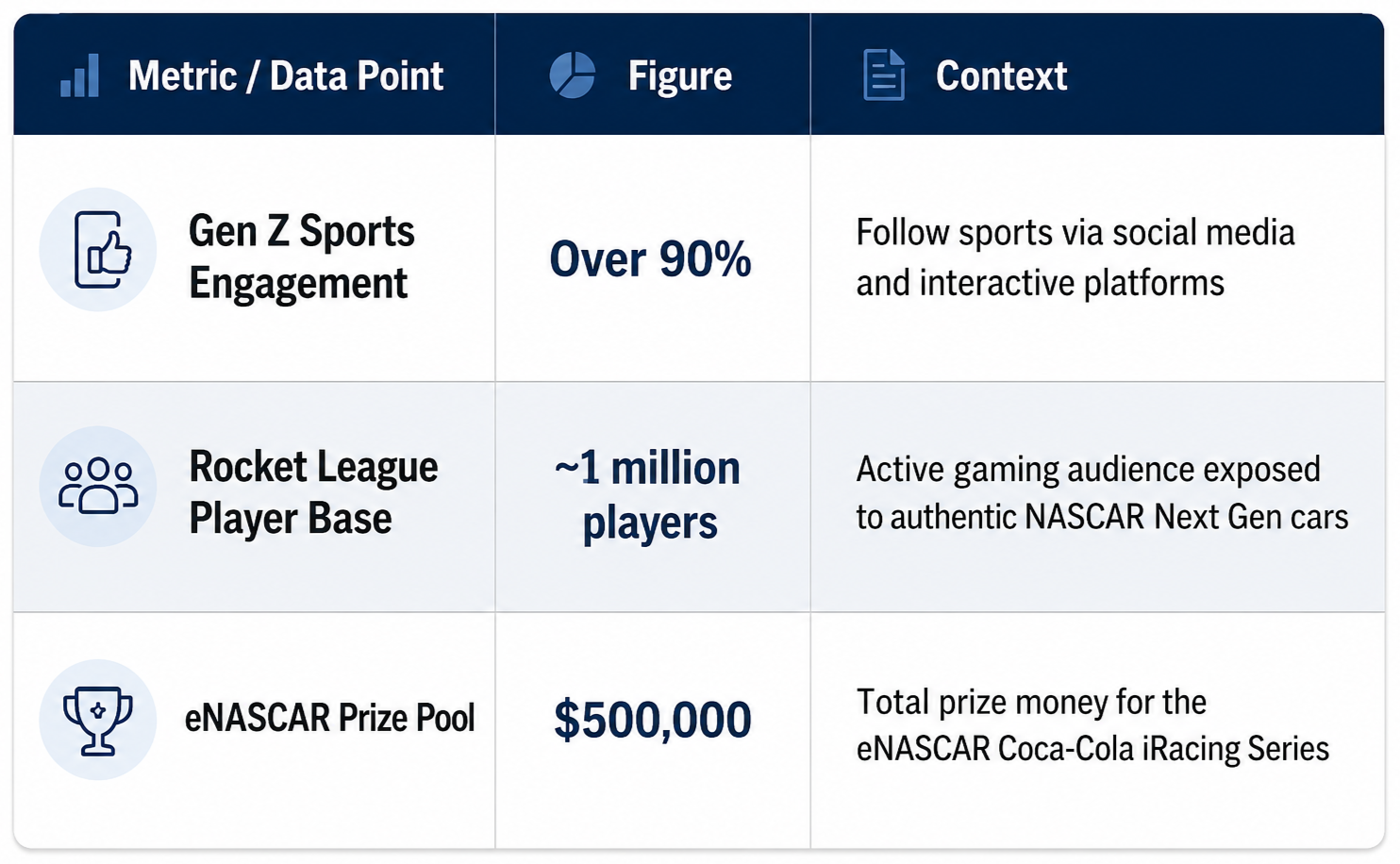
Research shows this change clearly. A 2025 Deloitte report found that over 90% of Gen Z fans use social media and interactive online platforms to follow sports.
NASCAR realized it needed to meet the next generation where they already spend their time. Instead of waiting for kids to find racing, the sport jumped headfirst into pixels, polygons, and virtual physics.
Below we will discuss how NASCAR is using digital worlds to build a huge new fanbase.
Dropping Custom Race Cars into Fortnite and Rocket League
Rocket League, which has around 1 million players, is one of the most popular crossover spaces. In this game, players use rocket-powered cars to play soccer in giant futuristic arenas. NASCAR brought its actual Next Gen cars right onto that pitch.
Players can slap authentic team paint schemes onto their vehicles. They can score an aerial goal while repping real race liveries and custom tire designs. It makes the sport feel cool, stylish, and full of action.
Then came Fortnite, which is far more than a battle royale. “Fortnite provides the perfect platform to engage a global audience, blending the intensity of NASCAR racing with the immersive world of Fortnite,” said Nick Rend, NASCAR’s managing director of Esports & Gaming.
NASCAR launched custom racing islands inside Unreal Editor for Fortnite (UEFN). These islands are not boring, flat ovals. They feature wild tracks with huge jumps, neon lights, and high-speed booster pads. Players can race each other, set lap records, and complete speed quests.
This crossover strategy works because it feels natural. Young players do not feel like they are watching a forced advertisement. Instead, they interact with stock cars while playing the games they already love with their best friends.
Building Immersive Playgrounds and Racing Hubs on Roblox
Roblox is the ultimate hangout spot for millions of young kids. NASCAR created whole digital theme parks inside the platform to welcome them.
It built its own official virtual world, NASCAR Speed Hub, within the platform. Players can design their own custom stock cars from scratch. They can pick wild colors, unlock cool spoiler designs, and upgrade engine parts by earning in-game coins.
The experience also includes mini-games and race courses. Players can run through timed obstacle courses, practice pit stop tire changes, and race against friends on fantasy tracks.
However, building spaces for kids on such platforms requires careful consideration. Recent lawsuits against Roblox highlight why it matters so much. According to TorHoerman Law, the lawsuits claim that Roblox's weak safety features and poor design failed to protect children, allowing predators to target, groom, and abuse them.
Families filing the Roblox lawsuit allege that the platform prioritized engagement and growth over putting proper safety measures in place to protect kids. It’s because of these issues that big brands need to step up by monitoring content. They must also encourage positive multiplayer spaces and make sure games are suitable for children.
Turning Sim Racing into a Pro Career with iRacing
Reaching casual gamers is great, but NASCAR also built a path for serious competition through iRacing. This is not just an arcade game, but also a hyper-realistic motorsport simulation.
The tracks in iRacing are mapped with real laser scanners down to the millimeter. The tire model calculates heat, wear, and rubber buildup in real time.
This realism led to the creation of the eNASCAR Coca-Cola iRacing Series. It is an officially sanctioned esports league where the best sim drivers in the world compete for a huge $500,000 prize pool. The races are broadcast live with professional announcers, pit strategy breakdowns, and telemetry data.
The most impressive part is the bridge between virtual racing and real life. Driving on iRacing requires the same visual focus, throttle control, and muscle memory as driving a real race car.
William Byron is the prime example. He did not grow up racing expensive go-karts from age 5. He learned how to drive and draft inside iRacing on his home computer.
He took those exact virtual skills to real asphalt tracks and climbed the ranks. Today, he is a Daytona 500 champion and a top star in the NASCAR Cup Series.
FAQs
Do real NASCAR drivers actually practice using virtual video games?
Yes. Real Cup Series drivers regularly train on simulators to learn track layouts, test pit strategies, and sharpen their reaction times before real race weekends.
Do you need expensive racing equipment to play NASCAR games?
No. Casual titles like Fortnite, Rocket League, and Roblox only require standard consoles, phones, or gamepads. Only professional simulators like iRacing benefit significantly from wheel-and-pedal setups.
Can virtual NASCAR gaming help me get a real racing license?
Sim racing builds verifiable driving telemetry and racecraft. Standout performances in sanctioned esports leagues frequently catch the eye of real-world driver development programs and team scouts.
Key Statistics
How we experience sports has changed forever. The next generation wants to be part of the action, not just passive viewers sitting on the sidelines.
NASCAR recognized this shift early and took real action. It built arcade fun in Rocket League, creative social hubs in Roblox, and elite driver development on iRacing.
By meeting kids inside their favorite virtual worlds, the sport is building a diverse and passionate fanbase for the future. The kid customizing a virtual stock car in their bedroom today might just win the real Daytona 500 tomorrow.